
User's manual for Baby Carrier
How to use the Little Frog carrier
The Prime Baby Carrier is designed for babies weighing between 4 kg (9 lbs) and 20 kg (45 lbs) and is suitable for use up to 36 months of age.
The Preschooler Carrier is intended for children aged 2-6 years, with a minimum height of 98 cm (3.2 ft).
REMEMBER!
- Read all instructions carefully before assembling and using the soft carrier.
- Check all buckles, snaps, and adjustments to ensure they are secure before each use.
- Inspect the carrier for ripped seams, torn straps or fabric, and damaged fasteners before each use.
- Stop using the carrier immediately if any parts are missing or damaged.
- Ensure your child is properly placed in the carrier, including correct leg positioning.
- Premature infants, infants with respiratory problems, and those under 4 months of age are at higher risk of suffocation.
- Never use the carrier if your balance or mobility is impaired due to exercise, drowsiness, or medical conditions.
- Avoid using the carrier during activities that involve heat sources or exposure to chemicals, such as cooking or cleaning.
- Do not wear the carrier while driving or riding as a passenger in a motor vehicle.
- Refrain from using the carrier during sports or physical activities such as running, cycling, swimming, or skiing.
- Be mindful of the increased risk of your child falling out of the carrier as they become more active.
- Until your child can sit independently, the carrier’s panel should fully support their back to ensure proper spinal alignment.
- Never unbuckle the waist belt while your child is in the carrier.
- The optimum height for your baby in the carrier is where you can easily “kiss them on the forehead”
- The carrier’s panel should support your child from one knee pit to the other, ensuring it is not too wide or too narrow.
- Your child’s knees should be positioned higher than their bottom, forming an "M" shape. This position is ideal for healthy hip development.
- Be cautious of potential hazards in your environment, such as hot drinks, heat sources, or spills.
- Follow all washing and care instructions provided on the carrier’s textile label.
- Keep the carrier out of reach of children when not in use.
WARNINGS:
- Constantly monitor your child and ensure the mouth and nose are unobstructed.
- For pre-term, low birthweight and children with medical conditions, seek advice from a health professional before using this product.
- Ensure your child’s chin is not resting on its chest as its breathing may be restricted which could lead to suffocation.
- To prevent hazards from falling, ensure that your child is securely positioned in the carrier.
- Your balance may be adversely affected by your movement and that of your child.
- Take care when bending or leaning forward or sideways.
- This carrier is not suitable for use during sporting activities.
Preparing the carrier for first use
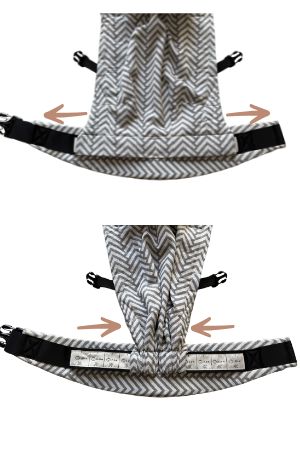 | 1) Adjust the panel width: The width of the panel should match your baby's size, so that it reaches from one knee pit to the other (especially important for smaller babies). The adjustment is located on the waist belt. |
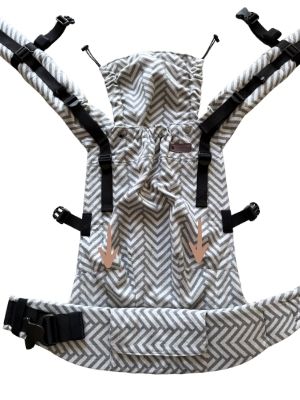 | 2) Adjust the panel height Use the adjustment straps located on the left and right sides of the panel to adapt it to your baby's size (gently pull the straps down to shorten the panel). If there is excess fabric after tightening, simply fold it. |
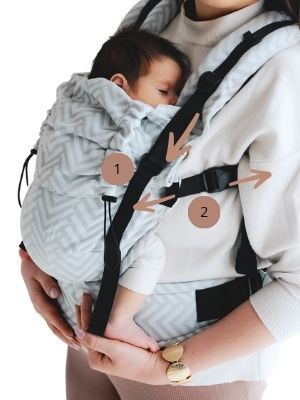 |
3) Adjust the shoulder straps
|
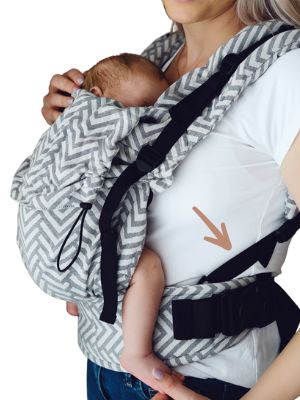 | 4) Optional botom fasteners for non-sitting babies (only for the PRIME carrier) are intended for babies who cannot sit up on their own yet, to reduce fabric tension on the baby’s back.
|
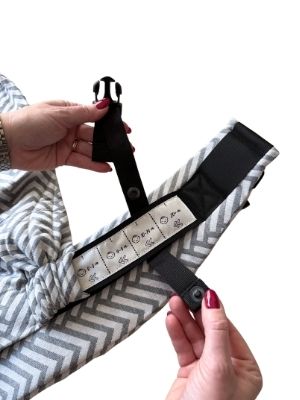 | The lower strap can be quickly and easily fastened using Velcro and a snap. Make sure the closures are securely attached to the waist belt, symmetrically on both sides at a slight angle. The lower strap can be purchased separately. |
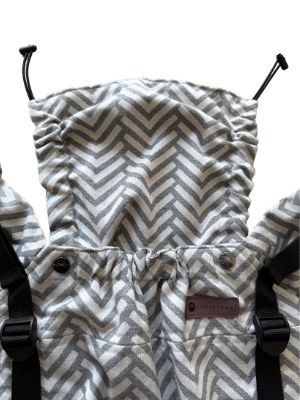 | 5) The upper part of the panel is elastic to help stabilize and support the baby’s head. The hood is attached with snaps and can be easily removed. |
Front Carry
1) Before the first use - take a careful look at the carrier and have a go wearing it, without the baby, in order to learn how the buckles and strap tightening system work. Then, adjust the shoulder straps, waist belt, and the panel.
2) Grab the carrier by the belt and place it at the level of your waist. The height of the belt depends on the child's size and your height. With smaller children, it is recommended to place the belt over your waist - so that the child's head is at the "kiss on the forehead" level. Withan older child, it is definitely more comfortable to fasten the belt below your waist, on the hips.
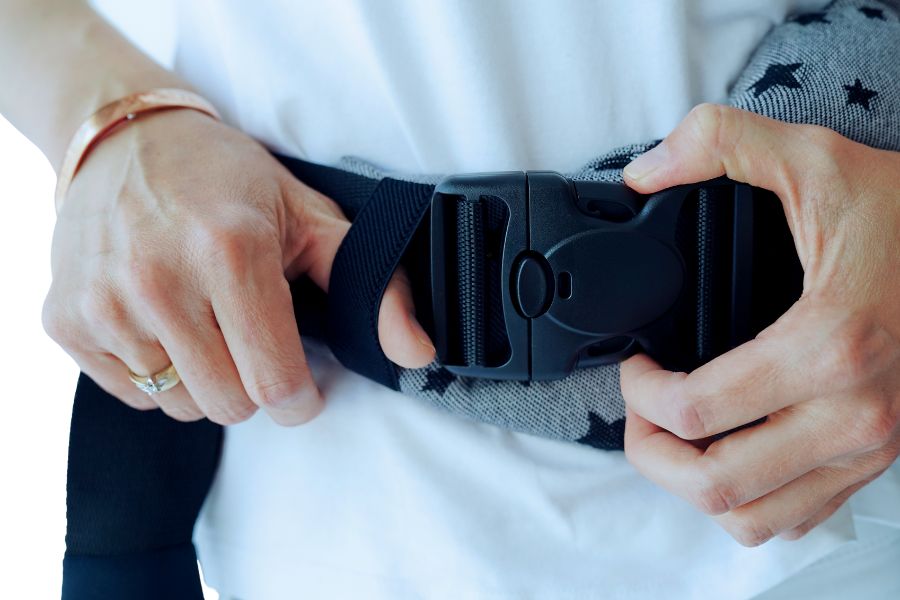 | 3) Put the buckle under the protective elastic and fasten it tohear the characteristic "click" (to make sure that is has been |
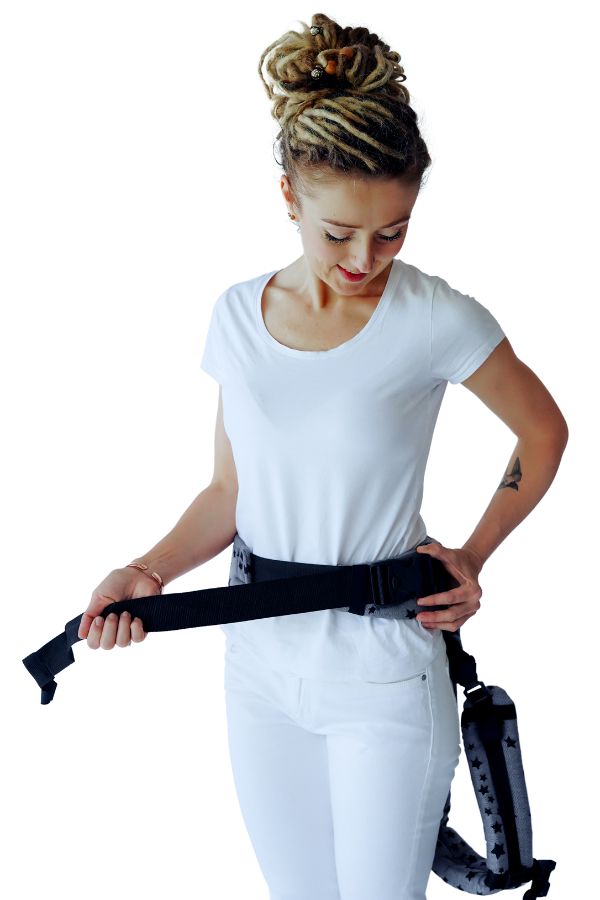 | 4) Pull the band so that the waist belt tightens the waist. 5) Move the panel forward and make sure it is symmetrical |
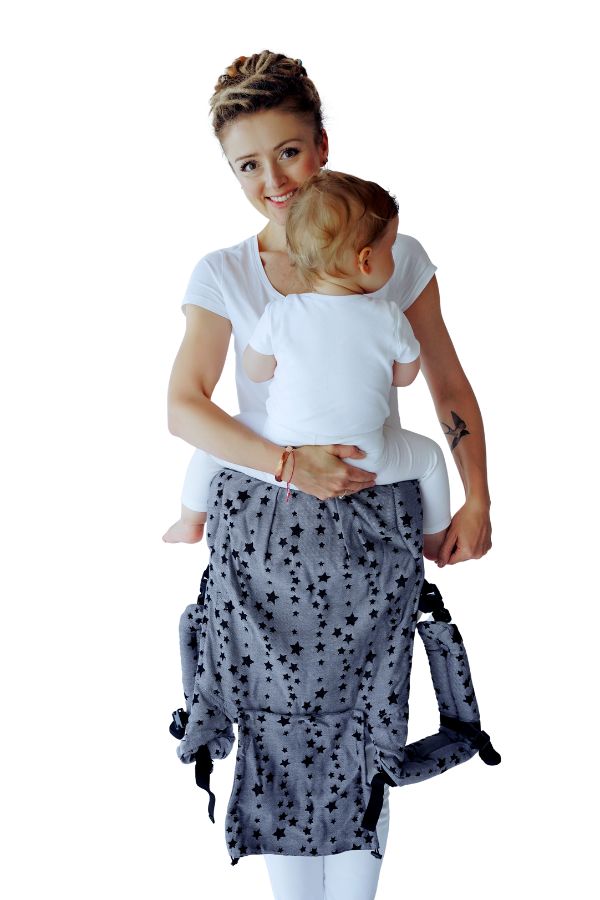 | 6) Take your child and hug them in the vertical position, just over the panel.The child's legs should be positioned on either side, so the panel reaches from one knee to other. |
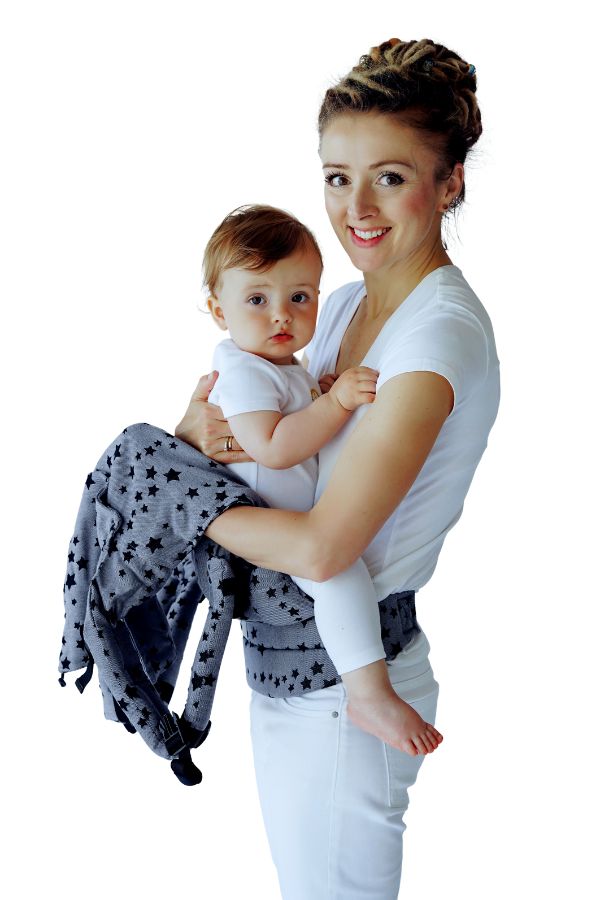 | 7) Hold your child with one hand and the panel with the other hand from the bottom; gently draw the panel over the child's back, from their bottom up to their neck. |
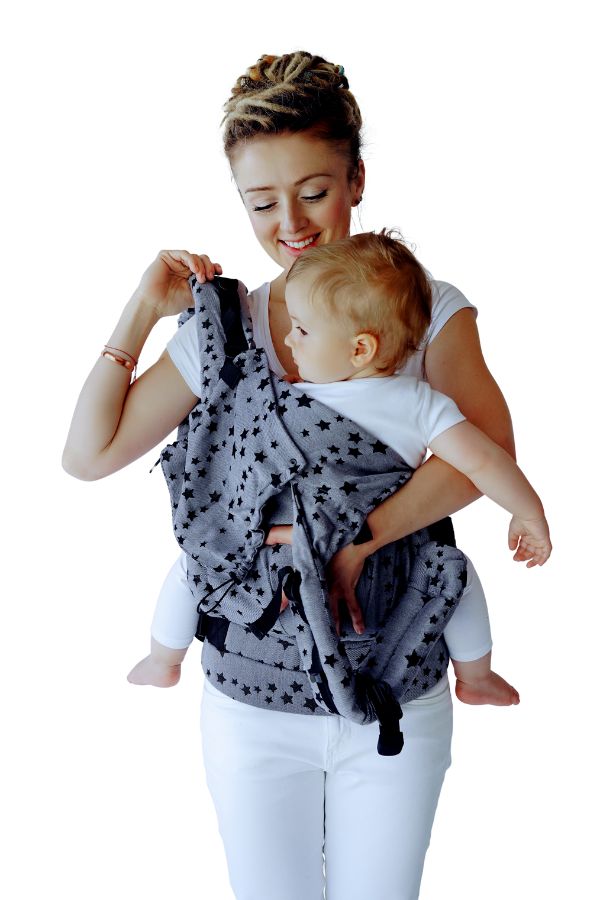 | 8) When holding your child in the carrier with your lefthand, place the shoulder strap over your opposite shoulder. |
| 9) Repeat from the other side. |
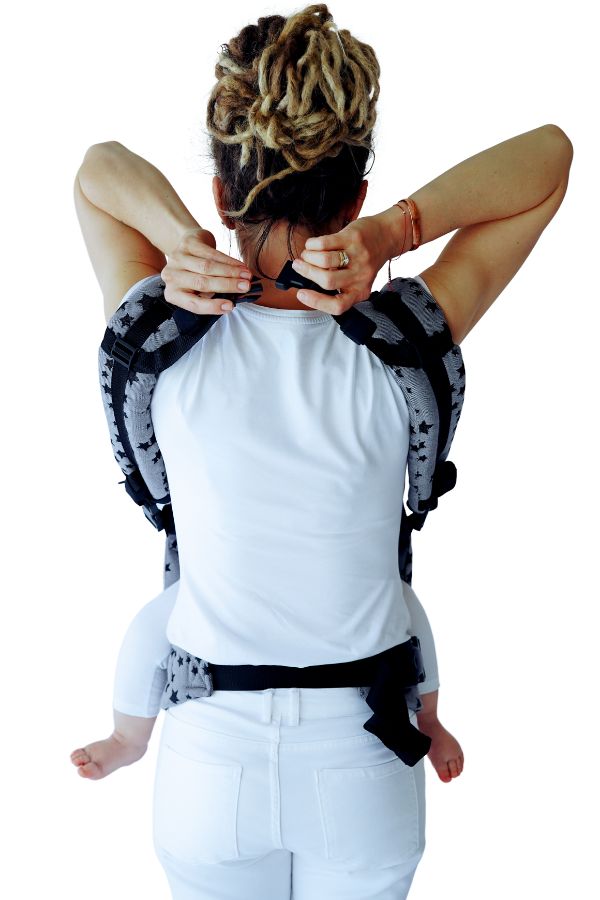 | 10) Fasten the chest-belt at the back, joining both shoulder straps. Adjust it by tightening or loosening it, until you feel the straps lie comfortably on your shoulders. |
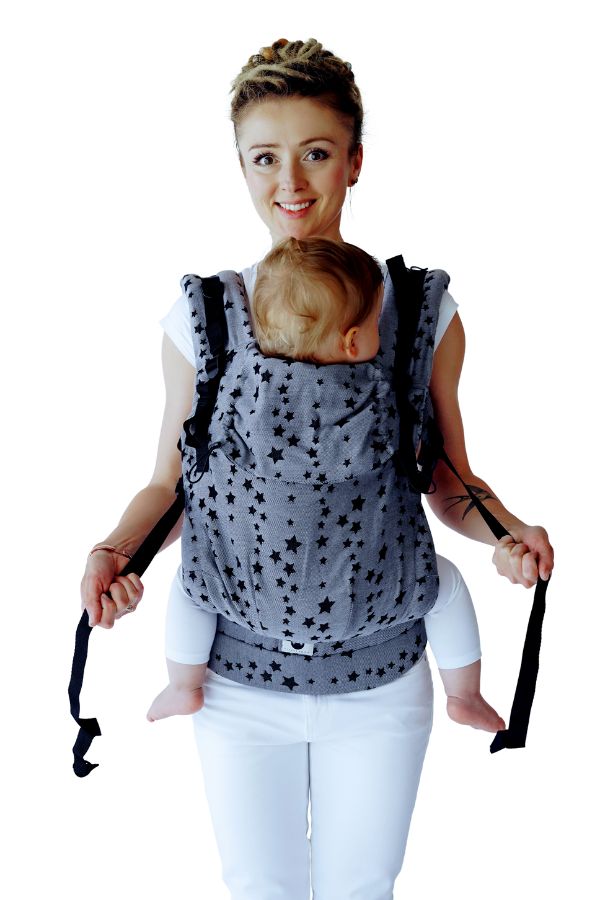 | 11) Now - pulling the straps - adjust shoulder straps so that the panel hugs and draws the baby close to you. The fabric is to support the back of the baby so remember not to leave it too loose. |
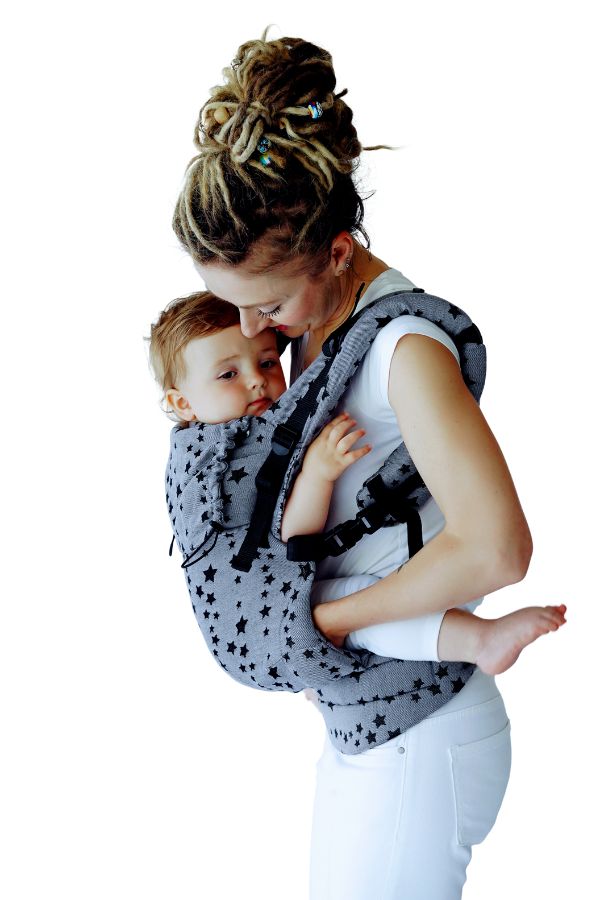 | 12) Finally, check if your child is positioned symmetrically n the carrier (the panel reaches from one knee pit to the other) and if the child’s bottom fits into the panel. If not - try to gently move the baby. |
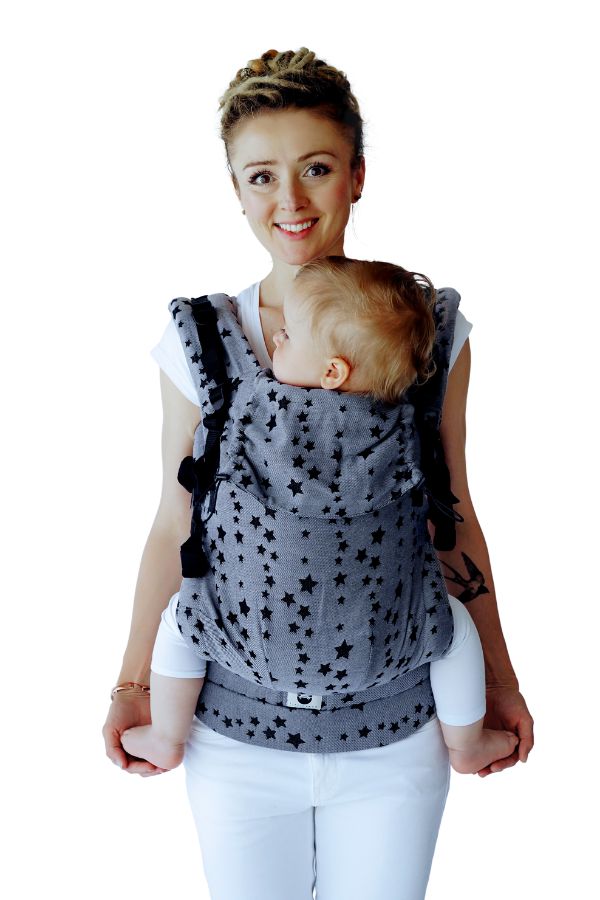 | 13) In the correct position knees should be placed above the bottom, in the so-called position “M”. |
| 14) For newborn/ non-sitting babies - we recommend to use additional bottom fasteners (to be sold separately) |
Front Carry - Straps Crossed
This way of carrying distributes the child's weight much better and places less strain on thewearer's back. It is especially recommended for longer walks.
1) Before the first use - take a careful look at the carrier and have a go wearing it, without thebaby, in order to learn how the buckles and strap tightening system work. Then, adjust theshoulder straps, waist belt, and the panel.
2) Grab the carrier by the belt and place it at the level of your waist. The height of the belt de-pends on the child's size and your height. With smaller children, it is recommended to place the belt over your waist - so that the child's head is at the "kiss on the forehead" level. Witholder child, it is definitely more comfortable to fasten the belt below your waist, on the hips.
| 3) Put the buckle under the protective elastic and fasten it tohear the characteristic "click" (to make sure that is has been |
| 4) Pull the band so that the waist belt tightens the waist. 5) Move the panel forward and make sure it is symmetrical |
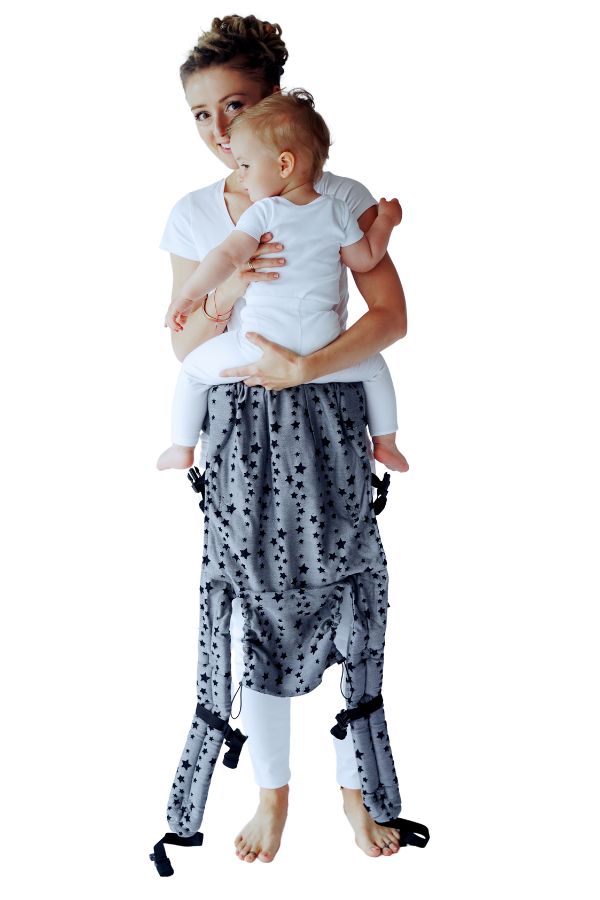 | 6) Take your child and hug them in the vertical position, just over the panel.The child's legs should be positioned on either side so the panel reaches from one knee to the other.Hold your child with one hand and the panel with the other hand from the bottom; gently draw the panel over the child's back, from bottom up to neck. |
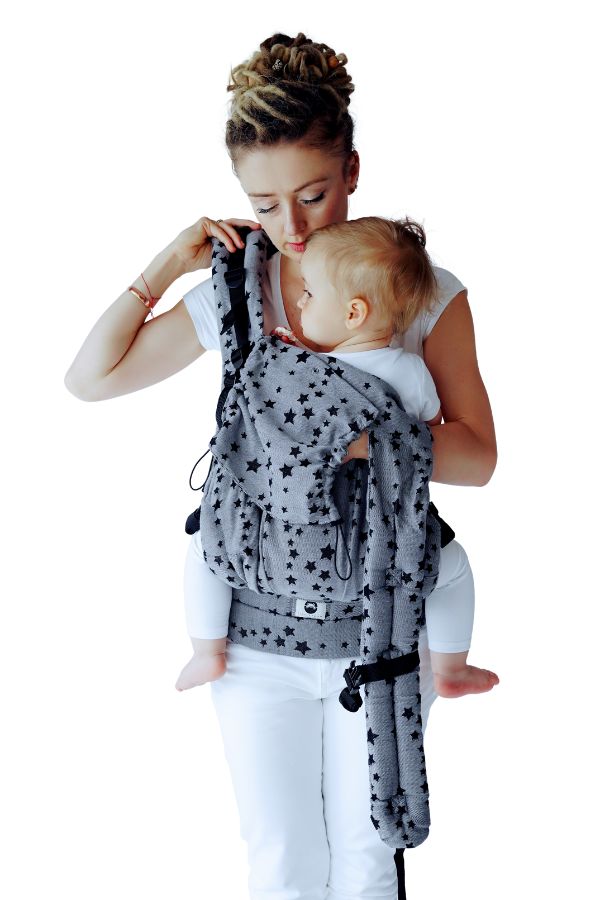 | 7) Holding your child in the baby carrier with your left hand, place the shoulder strap over your opposite shoulder. |
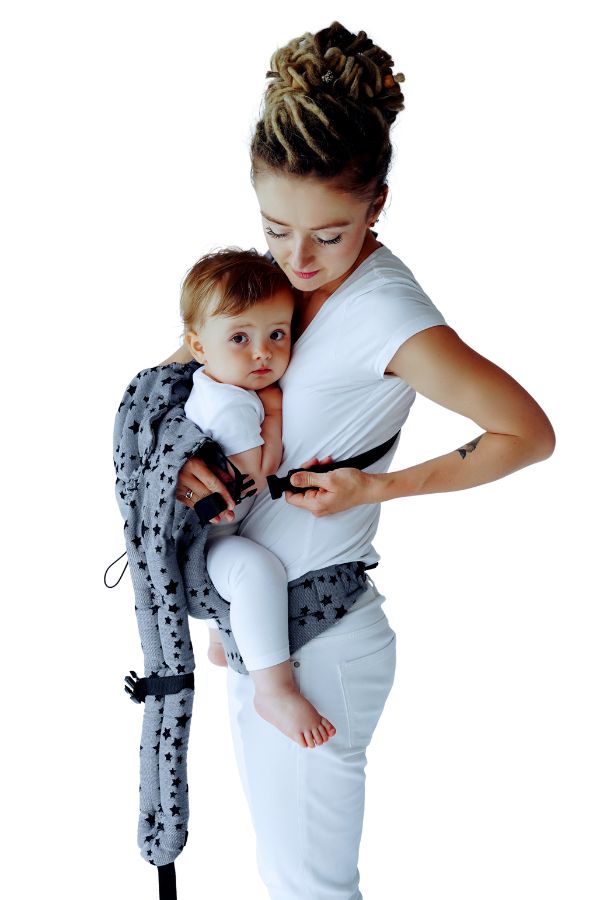 | 8) Fasten the buckle. |
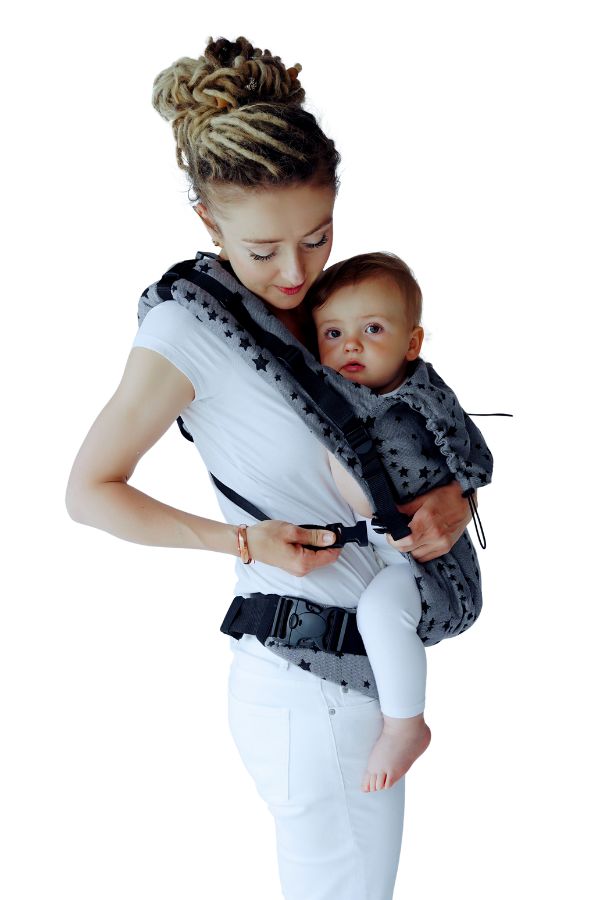 | 9) Repeat with the second strap. Keep holding your child until the second buckle is fastened. |
| 10) Now - pull the straps down and adjust shoulder belts, so the panel hugs and draws the baby close to you. The fabric is to support the back of the baby, so remember not to leave it too loose. |
| 11) Finally, check if your child is positioned symmetrically in the carrier (the panel reached from one knee pit to the other) and if the child's bottom fits into the panel. If not - try to gently move the baby. |
| 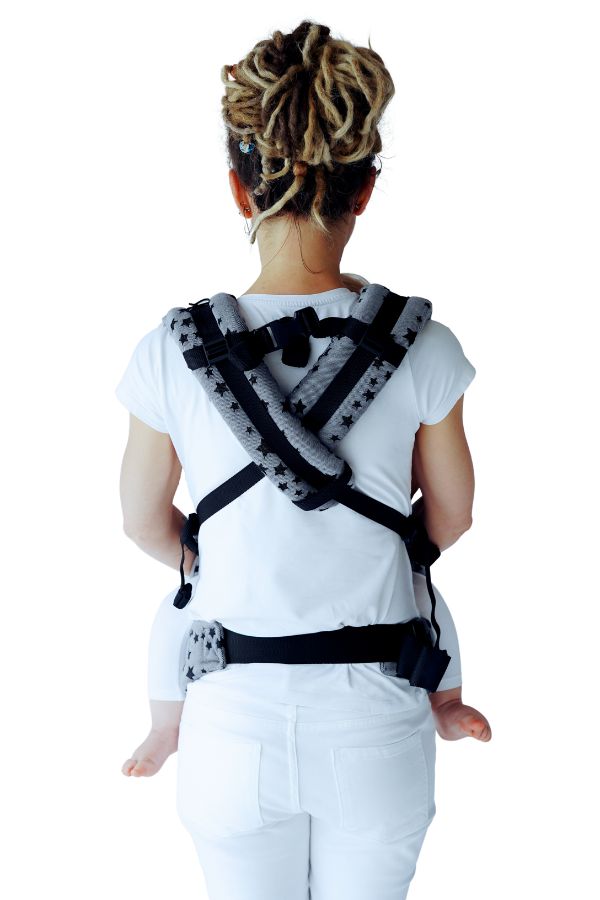 12) In the correct position, knees should be placed above the bottom, in the so-called position "M" 12) In the correct position, knees should be placed above the bottom, in the so-called position "M" |
| 13) In the correct position, knees should be placed above the bottom, in the so-called position “M”. |
| 14) For newborn/unsitting babies - we recommend to use additional bottom fasteners (to be sold separately) |
Back Carry
This way of carrying distributes the child's weight much better and places less strain on the wearer's back. It is especially recommended for longer walks.
1) Before the first use - take a careful look at the carrier and have a go wearing it, without the baby, in order to learn how the buckles and strap tightening system work. Then, adjust the shoulder straps, waist belt, and the panel.
2) Grab the carrier by the belt and place it at the level of your waist. The height of the belt de-pends on the child's size and your height. With smaller children, it is recommended to place the belt over your waist - so that the child's head is at the "kiss on the forehead" level. With older child, it is definitely more comfortable to fasten the belt below your waist, on the hips.
| 3) Put the buckle under the protective elastic and fasten it to hear the characteristic "click" (to make sure that is has been |
| 4) Pull the band so that the waist belt tightens the waist |
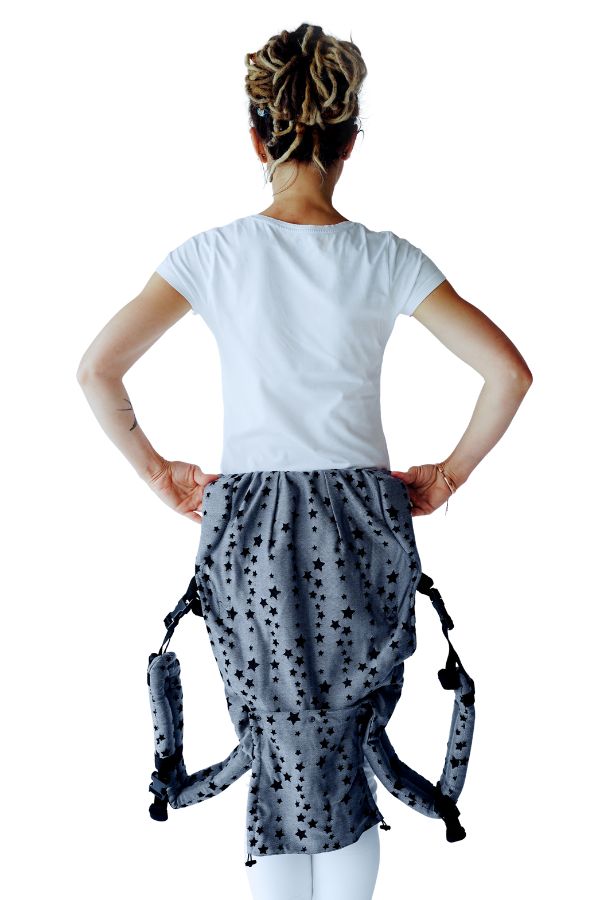 | 5) Move the panel forward and make sure it is symmetrical. |
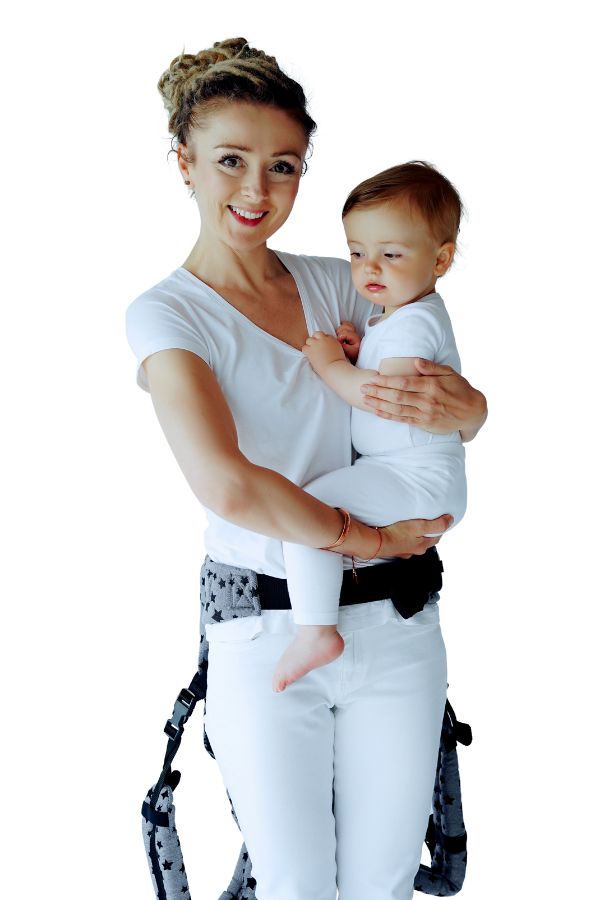 | 6) Put your child on your hip, hold the child's back with your hand. |
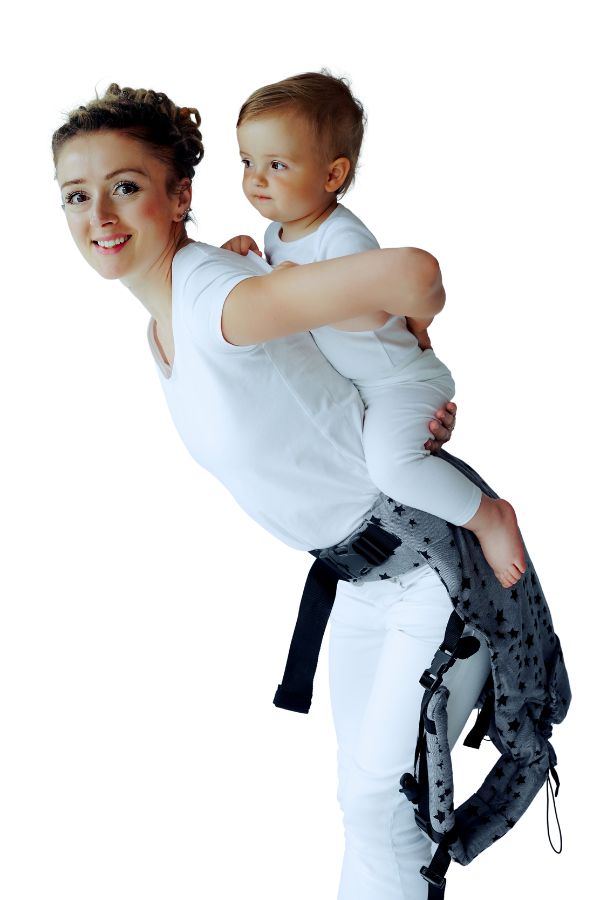 | 7) Lean forward and carefully slide your child on your back, holding baby's back and securing with the other hand |
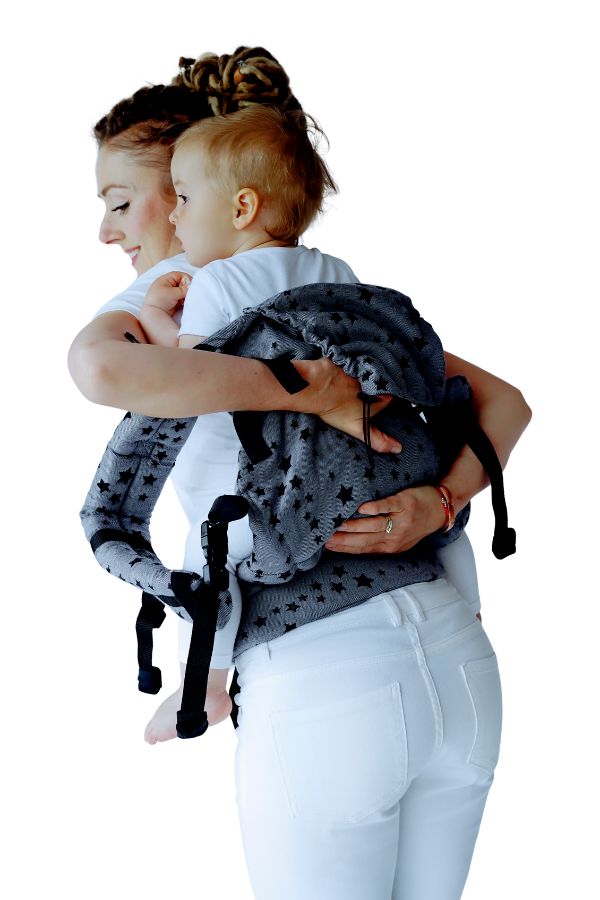 | 8) Place your child symmetrically over the panel(make sure the panel reaches from one knee to the other). Holding your baby with one hand, lift the panel up with the other one (continue leaning at all times). Make sure the panel covers your child's entire back. |
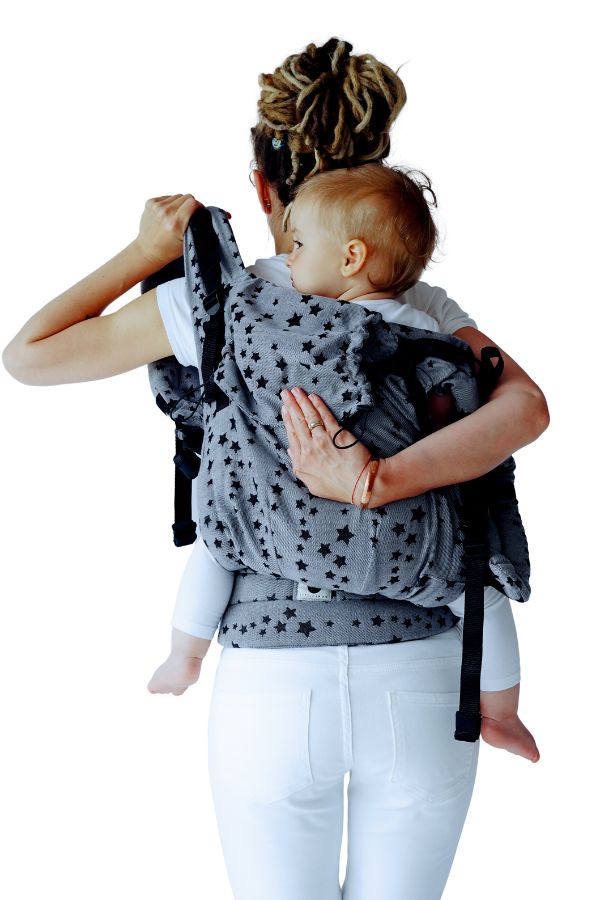 | 9) Holding your child in the baby carrier with your righthand, put your left hand in the arm of the shoulder strap. |
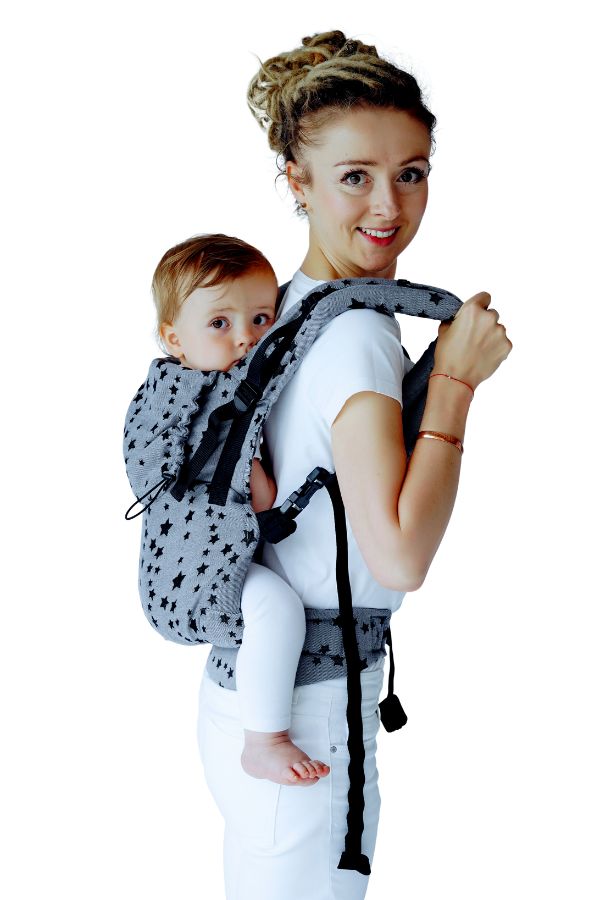 | 10) Repeat from the other side. As long as both straps are not placed on your shoulders, hold the back of your child all the time and remain in the leaning position. |
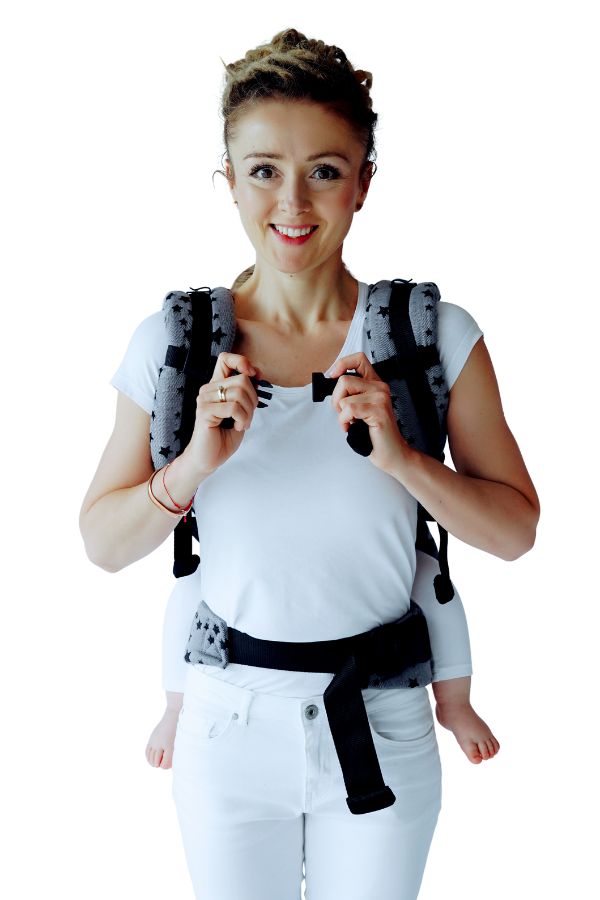 | 11) Fasten the chest-belt. |
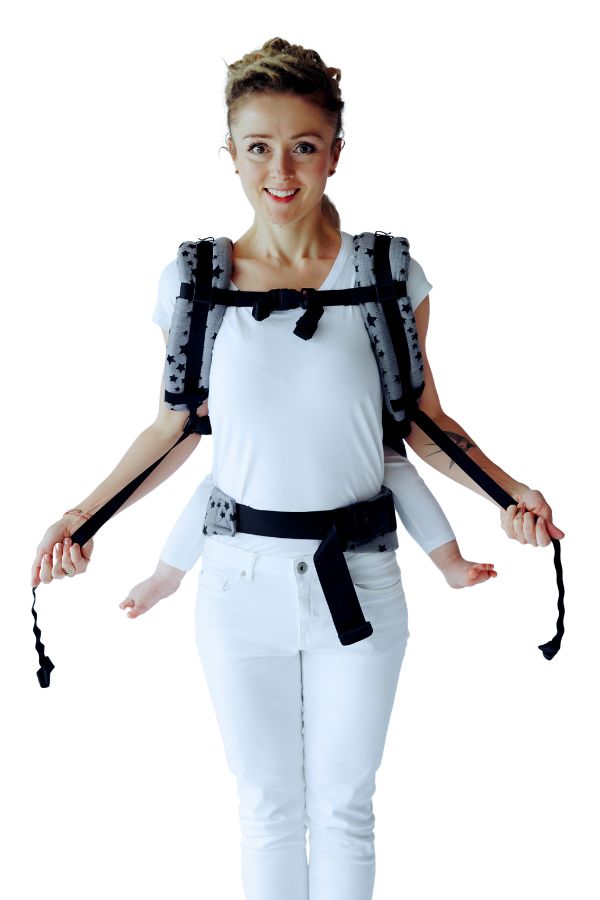 | 12) Adjust it by tightening or loosening it, until you feel the straps lie comfortably on your shoulders. |
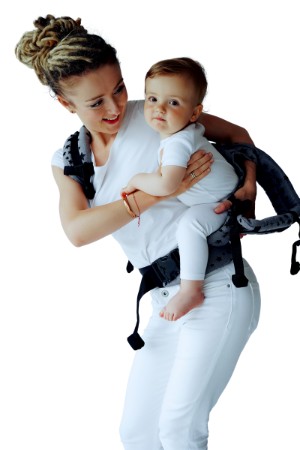 | 13) To take the baby out of the carrier, lean forward, supporting your baby with one hand and take off one of the shoulder straps with the other hand. Then hold your baby and slide her/him forward on your hip (from the side where you don't have[ a shoulder strap on). |