
Traveling with a Little One: What to Pack and What to Leave at Home?
As parents of three, we asked ourselves the exact same questions when our little ones were smaller: What will actually be useful? What is genuinely essential, and what will just end up being another unnecessary gadget taking up space in the trunk or suitcase?
Are you preparing for an upcoming trip with a baby or toddler and wondering how to manage everything smoothly? The answer to what you should pack depends directly on your destination, travel style, and climate. Yet whether you are planning a weekend city break in Rome, an all-inclusive resort getaway, or a backpacking adventure through Asia, you quickly realize on the road that the key to a restful vacation is traveling light and staying flexible.
Even if you frequently rely on a stroller in daily life, travel inevitably presents moments where wheels hit a wall: steep stairways in historic towns, sandy beaches, rocky hiking paths, or narrow airplane aisles.
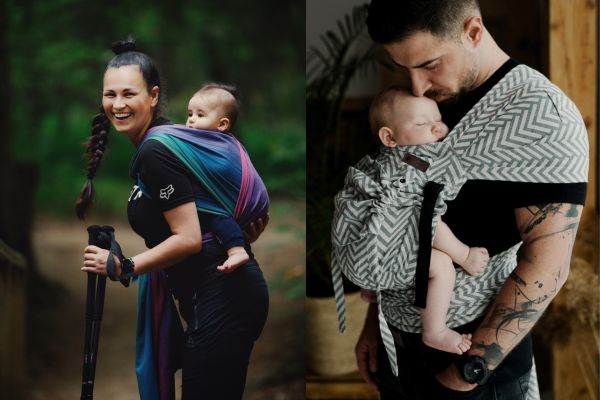
In our experience, a baby wrap or carrier is the true key to hassle-free travel with a baby. A woven wrap, ring sling, or ergonomic baby carrier can completely transform how your family travels, offering freedom of movement and peace of mind anywhere in the world. Read our practical guide to find the ideal solution for your next trip.
1. The Golden Rule of Family Travel: Mobility and Minimalism
Regardless of your destination, your gear must be portable and easy to manage. Keeping equipment to an absolute minimum is the real secret to calm parenting on the road. The less heavy, bulky gear you have to drag along, the more energy you keep for enjoying quality time together.
Why is a baby wrap or carrier a non-negotiable travel essential?
- Health and Ergonomics: They ensure a safe, physiological position with natural leg spread-squat alignment (the classic "M" position or frog posture), supporting healthy hip joint development and the spine's natural curve at every developmental stage.
- Calm Amid Overstimulation: Airports, train stations, and unfamiliar environments bring a sensory overload of sounds, lights, and crowds. Tucked close to a parent's chest, a baby senses familiar warmth, scent, and heartbeat, settling down and falling asleep easily anywhere.
- Hands-Free Freedom: You gain full mobility to roll luggage, show passports, snap photos, or enjoy a quick meal on the go.
2. Babywearing at the Airport and on Airplanes
Airports can easily become stressful: check-in queues, security checkpoints, luggage drops, and boarding calls.
Our Top Pick: A ring sling or a soft, ergonomic buckle carrier.
Practical Airport Tips:
- Security Checkpoints: In most airports, security officers will ask you to briefly take your little one out of the carrier while walking through the walk-through metal detector (the carrier passes through the X-ray scanner). With a ring sling or an ergonomic buckle carrier, putting your baby back in and tightening the rails takes just a few seconds.
- Takeoff and Landing Ear Comfort: Pressure changes inside the cabin can cause ear pain for infants. A carrier or sling allows for discreet, upright tummy-to-tummy feeding (nursing or bottle-feeding), which promotes swallowing, relieves ear pressure, and helps prevent reflux.
- Narrow Airplane Aisles: With your baby held safely against your body, you can navigate narrow airplane aisles to your seat without hassle, keeping hands free for your diaper bag and onboard essentials.
3. Resort Getaways, Historic Alleys, and City Breaks
Cobblestone streets in historic old towns, steep scenic overlooks, and packed dining areas at all-inclusive resorts are typical vacation sights. Elevators in these locations are often tiny or missing entirely.
- Ring Slings for Quick Transitions: The undisputed champion for short distances. Ideal when you need to pop down to the hotel breakfast, walk from your room to the beach, or check in at the reception desk. When folded up, it takes up no more space in your bag than a small muslin square.
- Adjustable Ergonomic Carriers: The top choice for hours of sightseeing in parks and museums. A supportive, wide waist belt distributes your child's weight evenly across your hips and shoulders, preventing back fatigue at the end of an active day.
4. Tropical Holidays and Hot Weather: Which Fabrics to Choose?
The most common worry for parents traveling to warm climates is infant overheating. Keep in mind that a wrap or carrier acts as an additional layer of clothing, and your body naturally gives off heat. The secret lies in selecting fabrics with natural thermoregulating properties:
- Tencel™ (Lyocell): A true breakthrough for high temperatures. It is silky smooth, naturally cool to the touch, absorbs significantly more moisture than regular cotton, and evaporates it rapidly.
- Linen: A summer classic. Exceptionally breathable, airy, and strong—making it a fantastic option for heavier babies and toddlers on sunny days.
- Bamboo: Naturally antibacterial, exceptionally soft, and pleasantly cool against delicate skin right out of the box.
Travel Tip: On hot days, dress your baby in a single light layer of natural breathable fabric (such as organic cotton or bamboo muslin), protect their head and neck with a wide-brimmed UV hat, and leave feet uncovered while applying baby-safe mineral sunscreen to exposed skin.
5. Off-the-Beaten-Track Travel, Backpacking, and Long Journeys
Are you backpacking across Asia, Latin America, or exploring less touristy corners of the globe? In destinations with broken sidewalks, high curbs, sandy tracks, and bustling motorbikes, mobility becomes your primary survival tool.
The Globetrotter's Reliable Duo: A lightweight woven wrap (or ring sling) + a sturdy ergonomic carrier.
- Wrap Versatility: On the road, a woven wrap is far more than a baby carrier. In unexpected situations, it functions as a light nap blanket, a clean bed sheet in guest rooms, a breathable sunshade in bus windows, or a clean diaper-changing mat on the beach.
- A Workhorse Ergonomic Carrier: Gives you balance and dependable support when boarding small boats, hopping into tuk-tuks, navigating crowded trains, or hiking challenging paths.
6. Mountain Trails and Day Hikes: Why Choose an Ergonomic Carrier?
Exposed tree roots, loose rocks, steep inclines, and narrow forest tracks require surefooted balance. Many parents naturally consider rigid metal hiking backpacks, but for younger babies, a soft, ergonomic carrier provides distinct benefits.
Rigid metal framed carriers are heavy on their own, take up large amounts of packing space, and are designed strictly for older children who already sit unassisted with complete stability. Crucially, they position the child's weight high and far behind your back, shifting your center of gravity on steep ascents.
Why an Ergonomic Carrier Excels on the Trail:
- Natural Center of Gravity: Your baby stays snug against your torso. You move together in a shared rhythm, making it much easier to keep your balance on uneven rocks and loose soil.
- Back Carrying: Once your baby sits independently and has strong torso control, switching to a back carry opens up a whole new hiking experience. You maintain clear foot visibility on rocky ground, while your little adventurer takes in trail views from over your shoulder.
- Support for Tired Toddlers: Older children (ages 2 to 6) love exploring on foot, but their stamina fades quickly. A Preschooler-sized carrier folded in your backpack rescues the outing when tired legs need a rest on the trek back.
7. Unpredictable Weather: Handling Cold, Rain, and Wind
Traveling outside the peak summer season can be wonderful, as long as you plan for thermal protection:
- For Rain and Wind: A lightweight, dedicated waterproof carrier cover with a hood attaches straight onto your carrier or wrap. Folded, it takes up a tiny fraction of your daypack.
- For Chilly Weather: Avoid thick, slippery snowsuits inside the carrier—they prevent proper M-position leg placement and make it hard to tighten the straps safely. It is far better to dress your baby in warm boiled wool or fleece layers and top both of you with an insulated softshell cover or babywearing coat, keeping each other warm through shared body heat.
Exploring the world with your little one nestled against your chest creates a deep bond and a comforting sense of safety in unfamiliar settings. With the right wrap or ergonomic carrier, travel hurdles disappear, and every destination is within reach. We wish you beautiful, calm, and unforgettable adventures!