
Newborn Woven Wraps
( number of products: 73 )


Colourful TENCEL™ Aurora Cube baby wrap – comfortable babywearing from the very first days (size 6)

Baby Sling TENCEL™ Aurora Cube size 5

Baby Sling TENCEL™ Aurora Cube size 4


Brown Bronzite baby wrap – a universal choice for everyday babywearing, size 6

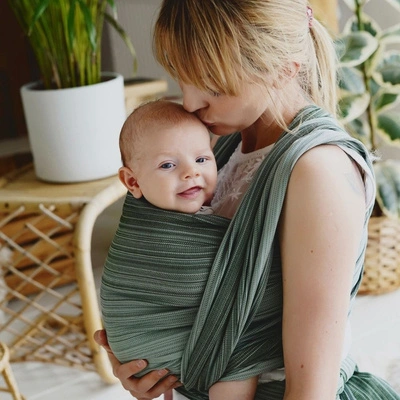
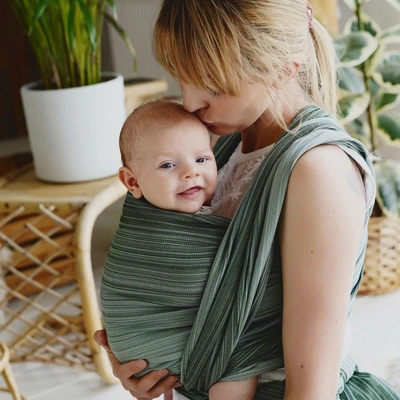

Bamboo Verdelite – a green, naturally soft baby wrap for babywearing, size 6


First baby wrap – a gentle start from the very first days of life
If you are looking for a solution suitable from the very beginning, a first baby wrap should be soft, easy to handle and comfortable for both the baby and the parent. In this category you will find models designed as a baby wrap for a newborn as well as a baby wrap for an infant, suitable for carrying from the very first days of life.
Baby wrap for a newborn and an infant – soft and lightweight for beginners
At the beginning, lighter wraps are usually the best choice. The first baby wraps in this category are soft and lightweight, with a fabric weight of up to 240 g/m². This makes them easy to tighten and allows them to adapt well to a small baby. As a result, both a baby wrap for an infant and a baby wrap for a newborn are comfortable to use every day and suitable for learning how to tie a wrap.
Here you will find wraps made from cotton, as well as options blended with bamboo or TENCEL™. These materials are pleasant to the touch, breathable and suitable for a baby’s sensitive skin.
A baby wrap for beginner parents – a simple and safe choice
A baby wrap for beginner parents should be intuitive and predictable when tying. That is why every baby wrap in this category comes with a step-by-step tying instruction, helping you learn safe babywearing without stress.
Thanks to the right balance of softness and flexibility, a baby wrap for a newborn as well as a baby wrap for an infant allows you to achieve a stable and comfortable carry from the very first attempts.
A well-considered choice for the first stage of babywearing
A good first baby wrap provides a sense of security and supports everyday comfort. Lighter fabric weight, natural fibres and ease of use make it a practical part of daily life – both at home and outdoors.
A baby wrap allows you to stay close to your baby, respond to their needs and still enjoy freedom of movement. It is a calm and natural way to begin your babywearing journey.
FAQ: Choosing and Buying a Baby Wrap
Cotton wrap or a blend (linen, bamboo, TENCEL) – what to choose for the start?
For beginners, 100% cotton is the best choice. It is easy to care for, not slippery, and very forgiving when learning how to tighten the wrap.
- Bamboo: Recommended for newborns and hot weather (cool to the touch), but can be a bit slippery.
- Len (Linen): Ideal for heavier babies (above 8–10 kg) as it provides excellent support, but it requires "breaking in" to soften the initial stiffness.
- Tencel: Has similar properties to bamboo.
What is the difference between broken twill, jacquard, and herringbone weaves?
The difference lies in the weaving method and how the fabric "works" while wrapping:
- Broken twill weave: Most recommended for beginners. The wrap stretches only diagonally, making it easy to tighten evenly and provide stable support for the baby's spine. Usually comes in striped patterns.
- Jacquard weave: Allows for complex patterns and colors. These wraps are often softer from the start, but tightening them might require some practice due to the varied texture of the pattern.
- Herringbone weave: Soft and moldable from the very first use. Usually available in solid colors or gradients, which helps beginners see where to pull the fabric.
Is it better to buy a used wrap or invest in a new one?
The choice depends on your priorities:
- Used wrap: Usually already "broken-in" (soft and moldable), which makes learning to wrap easier.
- New wrap: Provides certainty regarding hygiene and history of use (no hidden damage). Most Little Frog wraps are designed to be soft from the start, so they are ready to use after the first wash.
What is the difference between Stretchy Baby Wraps and woven wraps?
- Stretchy Baby Wraps: Made of stretchy jersey knit. You tie it on yourself before putting the baby in. Generally suitable up to about 7–8 kg. It is quick, easy to use, and does not require tightening.
- Woven wrap: More stable than standard Stretchy Baby Wraps and lasts much longer. It requires learning how to tie and tighten, but it is not a difficult task. It can be used from the first days for as long as the parent and child want – even for older and heavier toddlers.
Short wrap (rebozo) – what is it for and is it worth having?
A rebozo wrap (size 2 or 3, approx. 2.6–3.2 m) is used for quick carries on one shoulder (e.g., hip carry) or as belly support during pregnancy. It is worth having as a second wrap in your collection – perfect for short distances and quick carries.
What weight (gsm) is best for a newborn vs. an older baby?
GSM (grams per square meter) indicates the thickness and density of the fabric:
- 190–240 g/m²: Thin to medium wraps, ideal for newborns and infants. They are easy to tighten and not overwhelming with too much fabric.
- 260–320 g/m²: Thicker wraps, designed for older children. They provide better cushioning on the parent's shoulders when carrying a heavier weight.
How to choose the right wrap length?
The length depends on the wearer's clothing size and the types of carries planned:
- Size 5 (4.2 m): For petite people (clothing size XS–S).
- Size 6 (4.6 m): The most universal size, fits most body types (M–L) and allows for all types of carries.
- Size 7 (5.2 m): For taller people or those with a larger build (XL+).
What is the difference between a ring sling and a long woven wrap?
- Woven wrap: Requires learning how to tie, but distributes weight evenly over both shoulders, which is healthier for long walks. Can be used for front, hip, and back carries.
- Ring sling: Faster to put on (threaded through rings) but puts the weight asymmetrically on only one shoulder. Ideal for short trips (e.g., from car to shop) or for toddlers who want to get up and down frequently.
Long wrap or ring sling – which is better as the only wrap at home?
If you are looking for just one wrap, a long woven wrap is the better choice. It is more versatile: it allows you to carry your child from birth until the end of the babywearing stage (even up to 3–4 years) and distributes weight symmetrically, which is better for the parent's back.
Should I buy a Stretchy Baby Wrap or go straight to a woven one?
From an economical standpoint, a woven wrap is a better investment. Stretchy Baby Wraps usually last until the baby is 3–5 months old (after that, they start to sag under the baby's weight). A woven wrap is a purchase for years. However, a Stretchy Baby Wrap is much cheaper and is a great way to start your babywearing journey or a perfect gift for new parents.
When is it time to switch from a wrap to a carrier?
There is no strict age limit. A woven wrap can easily hold over 20 kg. Parents usually switch to a carrier when the child becomes very active or when the parent wants a faster way to put the baby on than tying several meters of fabric.
Do dark-colored wraps get hotter in the summer?
In babywearing, thermal comfort depends primarily on the fabric composition and weight (gsm), not the color. A thin wrap with bamboo or linen in a dark color will be much cooler than a thick, densely woven cotton wrap in white.
Can the baby feel the jacquard pattern?
Little Frog jacquard patterns are designed so that the fabric remains soft and smooth. The baby does not feel the pattern as irritating.
Does it matter which side (right or left) I use for wrapping?
In terms of safety – no. In terms of aesthetics – yes, jacquard wraps have a "negative" of the pattern on the reverse side. However, it is worth paying attention to the rails (edges); many wraps have different colored rails, which makes learning to tighten and orienting the fabric much easier.
What does the Oeko-Tex Standard 100 certificate mean for a wrap?
It is a guarantee that the fabric is free from harmful substances (pesticides, allergenic dyes, heavy metals). This is crucial as infants often have direct skin contact with the wrap or even chew on its edges.
What is the maximum weight a baby woven wrap can hold?
Little Frog woven wraps are tested according to safety standards and can hold a weight of 20 kg+. The weave construction ensures the fabric will not tear even when carrying a toddler.
Why do wraps have tapered ends (tails)?
Tapered ends make tying easier and ensure the knot is smaller, less bulky, and easier to tighten. It also makes the wrap look more aesthetic when tied.
Will one wrap (size 6 – 4.6 m) fit both parents?
Size 6 is the most universal. It allows a person with an M/L clothing size to do all carries, and for a smaller person (XS/S), it simply leaves longer tails that can be wrapped around the waist. To choose the perfect size, check our size chart or contact us – we are happy to help.
How to measure wrap length at home?
A wrap is always measured along one rail (from tip to tip). Remember that a new, unwashed wrap may be slightly longer because natural cotton shrinks by about 5% after the first wash.
What should I do if the wrap I bought is too long?
The extra fabric can be used for an extra wrap around the waist or tied in a decorative knot. In our shop, it is also possible to exchange it for a different, more suitable size.
Which wrap is best for air travel?
A ring sling is often best (quick to put on/take off during security checks) or a short woven wrap. If you have a long flight, a long woven wrap allows the baby to sleep safely on your chest, keeping your hands free.
Can a wrap be used as a blanket or hammock?
Yes! Woven wraps are incredibly durable. Besides carrying, they work great as a picnic blanket, a sunshade, or – when tied to a bed frame or under a table – as a safe hammock for a child.
Do I need to wash a new wrap before the first use?
Yes, every new wrap should be washed before use (if you decide to keep it). Washing removes production residues and allows the fibers to "set." A wrap only reaches its target length and properties after the first wash. If you are unsure about the length, try it on "dry" before washing to maintain the possibility of return or exchange.
Which wrap is best for summer and which for winter?
- For summer: We recommend lower gsm wraps (thin) and blends with bamboo, TENCEL, or linen, which are better at wicking away moisture.
- For winter: Color or composition matters less, as you dress the baby according to outdoor conditions, using an extra fleece cover or a babywearing jacket. Remember: a wrap counts as one layer of clothing, and you also share your body heat with the baby.
Do light-colored wraps wear out faster? How to care for colors?
Color does not affect the durability of the wrap. Light wraps may need washing more often due to