
Frequently Asked Questions About Babywearing Wraps
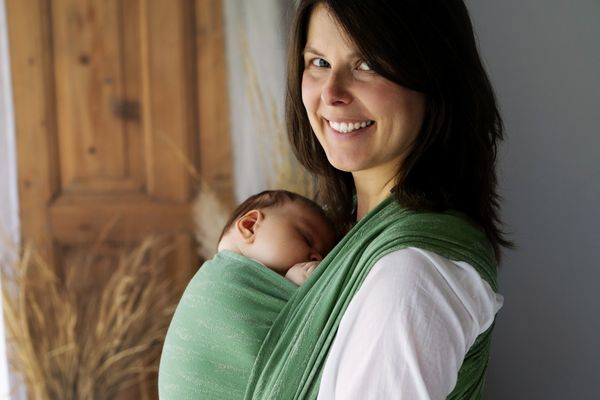
1. What is a babywearing wrap and what are its benefits?
A baby wrap is a long piece of specially woven fabric (e.g. diagonal twill or jacquard) that you wrap around your body to create a secure “pocket” for your baby. It provides ergonomic support for the baby’s back and hips, relieves strain on the caregiver’s spine, promotes healthy hip development (M-position) and keeps parent and child close. For the wearer it offers free hands, easy mobility and stronger bonding.
2. Difference between a woven wrap and a ring sling
- Woven wrap: long fabric that needs tying (kangaroo, pocket wrap, etc.), suitable from birth for front, hip and back carries, distributes weight evenly for long wearing comfort.
- Ring sling: shorter fabric threaded through two rings for a one-shoulder carry, quick to put on and great for short outings, but less even weight distribution for long wear.
3. Who can use a woven wrap?
Suitable from birth for newborns, infants and even preschoolers. Anyone can wear—parents, siblings, grandparents. Choose:
- Carry style: kangaroo or pocket for tiny babies; double hammock or back carry for older children.
- Wrap weight (GSM): 190–240 g/m² for newborns; 260 g/m²+ for heavier toddlers.
4. Stretchy wrap vs. woven wrap
- Stretchy wrap: soft elastic knit, easy to learn, ideal for newborns and beginners, supports up to ~10 kg (around 6–9 months).
- Woven wrap: durable woven fabric, allows multiple carry positions, one wrap can be used from birth to 3 years+ (up to 20–25 kg).
5. Types of babywearing wraps
- Stretchy wrap: soft, beginner-friendly, for front carries with newborns.
- Woven wrap: sturdy and versatile, for front, hip and back carries.
- Ring sling: quick single-shoulder option, perfect for hip carries on the go.
6. Can you carry facing outward?
Outward-facing carries exist but are not recommended unless advised by a health professional. They can overload the spine and expose the baby to too many stimuli. Choose inward (tummy-to-tummy), hip or back carries instead.
7. Choosing wrap weight (GSM)
- 190–240 g/m²: best for newborns and babies up to ~10 kg.
- 240–280 g/m²: universal weight for infants and toddlers.
- 280 g/m²+: for toddlers and preschoolers.
8. Which newborn wrap size to choose?
Follow the manufacturer’s size chart (sizes 4–7) and consider:
- Carry style (kangaroo, pocket, double hammock, simple back carry).
- Wearer’s height and torso circumference.
9. Best first wrap size
For most caregivers size 6 (4.6 m) is ideal—suitable for basic and advanced carries without excess fabric. Always check the size chart before buying.
10. Best wrap materials (hypoallergenic)
- 100% cotton: soft, breathable, naturally hypoallergenic.
- Bamboo: antibacterial, moisture-wicking, slightly cooling.
- TENCEL™ (lyocell): ultra-soft, durable, highly breathable, great for sensitive skin.
- Linen: very breathable but stiffer; excellent for hot weather, often blended with cotton.
11. Do woven wraps need breaking in?
Little Frog wraps are soft and ready to use. Wash once at 40 °C to align fibers and remove production residues. After a few carries the wrap will naturally soften further.
12. Washing and care
- Wash: gentle cycle at 30–40 °C without bleach or fabric softener.
- Frequency: when dirty or about once a week with daily use.
- Drying: lay flat or hang to dry; avoid tumble drying to protect the fabric.
Recommended

Beige Quartz Baby Wrap 4.6 m – classic woven wrap with a broken twill weave

Baby Sling Aurora Cube size 6

Baby Sling Dark Aurora Cube size 6

Baby Sling Jade Cube size 6 – green-grey wrap carrier from newborn

Bamboo Zircon – breathable, colourful baby wrap for babywearing, size 6

Colourful Bamboo Baby Wrap Misty Zircon 4.6 m – delicate and breathable

Green Malachite baby wrap – classic woven wrap, size 6

Blue Boleite baby wrap – ergonomic newborn babywearing (size 6)

Baby Sling TENCEL™ Atmosphere Cube size 6

Baby Sling Roselily Cube size 6

Baby Sling TENCEL™ Calm Cube size 6
