
ergonomic baby carrier for a 5-months-old
( number of products: 25 )
Baby Carrier Prime TENCEL™ Joy of life v3

Baby Carrier Prime Sage Moonstone v3

Baby Carrier Prime Calm Miles v3

Baby Carrier Prime Umber Lightness v3

Baby Carrier Prime Gray Moonstone v3

Baby Carrier Prime Beige Moonstone v3

Ergonomic Baby Carrier Prime - Pure Linen Frappe

Baby Carrier Prime Natural Wildness

Ergonomic Baby Carrier Prime - Pure Linen Shadow

Ergonomic Baby Carrier Prime - Pure Linen Dune

Ergonomic Baby Carrier Prime - Pure Linen Mistral

Ergonomic Baby Carrier Prime - Pure Linen Grove

Ergonomic Baby Carrier Prime - Pure Linen Marsala
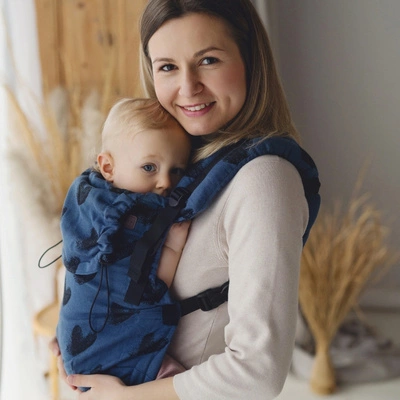
Blue Ergonomic Baby Carrier Prime Infinity Love – Black Hearts
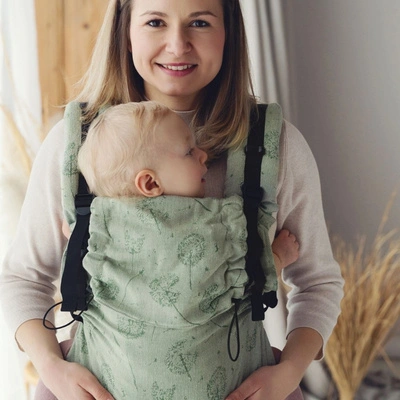
Linen Baby Carrier Prime Flow Lightness, Green Dandelion

Baby Carrier Prime Zen Path – Black & White with Recycled Cotton

Baby Carrier Prime TENCEL™ Aurora Cube v3

Baby Carrier Prime Viridian Miles v3

Baby Carrier Prime Re Rocky Miles v3

Baby Carrier Prime Dragon Miles v3

Baby Carrier Prime Slate Moonstone v3

Baby Carrier Prime Natural Miles v3

Baby Carrier Prime Adventure Miles v3

Baby Carrier Prime Platinum Miles v3

Baby Carrier Prime Linen Lightness v3
FAQ: Baby Carriers for 5-Month-Old Infants
Yes, provided the carrier is made of soft wrap fabric and has an adjustable panel. At 5 months, babies usually have stable head control, allowing for the safe use of certified ergonomic carriers that support the natural position of the spine.
For a baby who isn't sitting up yet (including 5-month-olds), an adjustable carrier (one that "grows" with the child) is best. It’s important that the panel is soft and contours to the baby's back without forcing it to straighten prematurely. Avoid stiffened carriers, as they do not provide a physiological position.
The healthiest is the "frog" position (M-position). The knees should be slightly higher than the bottom, with the legs appropriately spread to the sides. The baby's back should maintain its natural "C-curve" (slight rounding).
Definitely not. Forward-facing carry is unhealthy for the baby's hips and spine. It also exposes a 5-month-old to too much stimuli that they cannot yet process. A safe alternative for curious babies is back carrying (once they have stable head control).
There are no strict time limits, but it is recommended to take breaks every 1.5–2 hours. It’s important to watch your baby's cues. Remember that infants also need time for free movement on a flat surface (like a play mat) to support their motor development.
The panel should end exactly at the baby's knee pits. If the fabric forces the legs to straighten or digs into the back of the knees, the carrier needs to be adjusted (narrowed). An adjustable carrier allows you to set the width perfectly to the centimeter.
A hood is very useful during naps—it stabilizes the head and prevents it from lolling. In the summer, it provides shade from the sun, and on cooler days, it protects against the wind.
A ring sling is great for short distances and allows for a hip carry. However, the weight rests on only one shoulder. An ergonomic carrier distributes the weight across both shoulders and hips, making it much more comfortable for your back during longer walks.
An adjustable carrier made of linen or a linen-cotton blend is ideal. Linen is excellent at wicking away heat, preventing the baby from overheating. Ensure the panel is soft and lacks thick padding for better air circulation.
It is an absolute "must-have." At the airport, it keeps your hands free during check-in and boarding. The closeness to the parent and the gentle swaying help babies fall asleep in new environments. A carrier takes up a fraction of the space compared to a stroller.