
Little Frog ergonomic baby carriers – FAQ, tips and instructions
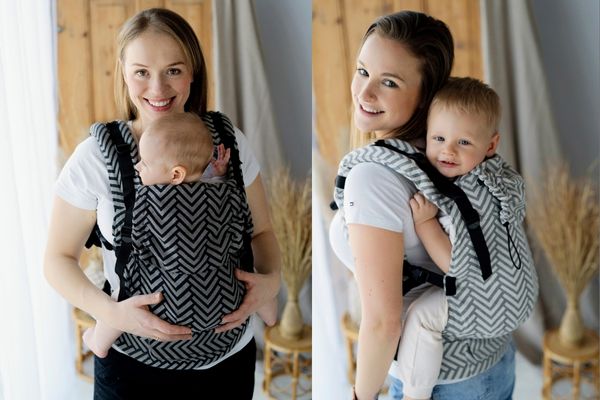
11. What are the benefits of using an ergonomic baby carrier?
Using an ergonomic baby carrier brings benefits both for the baby and the parent. Physical closeness supports emotional bonding, gives the child a sense of safety and helps them calm down faster by hearing the heartbeat and feeling the parent’s warmth and smell. Parents gain freedom of movement and free hands, making it easier to do daily tasks or enjoy walks without a stroller.
Additionally, the ergonomic “M” position supports healthy hip and spine development, while the even distribution of weight in the carrier relieves the parent’s back and shoulders, ensuring comfort. It’s a solution that combines safety, convenience, and closeness every day.
12. Is an ergonomic carrier suitable for long walks and hikes?
Yes, the Little Frog ergonomic carrier is perfect for long walks and hikes, both in the city and on more challenging terrain. By distributing the baby’s weight evenly across the hips and shoulders, the carrier significantly relieves the spine and allows comfortable carrying for several hours.
The child sits in a stable ergonomic position, ensuring safety and comfort during the journey. It’s a practical alternative to a stroller or bulky hiking carrier, especially where strollers are difficult to use. Adjustable straps and soft padding make babywearing comfortable for both parent and child, even over long distances.
13. How to position the baby correctly in the baby carrier?
When putting on the babt carrier, make sure your baby is seated symmetrically. Check in the mirror that the panel supports from knee to knee, and that the arms are at the same height – both pointing up or down. If the baby leans to one side, slide them gently with your hands until symmetry is achieved.
For the correct “M” position, your baby’s legs should be spread and supported from one knee pit to the other, with knees higher than the bottom. This creates the “M” shape recommended by orthopedists. The baby’s spine should be naturally rounded in a “C” curve. The panel should support the back up to the nape without restricting head movement. Only in this position does the carrier provide safe and healthy support for hips and spine.
14. Can a premature baby be carried in a baby carrier?
Little Frog ergonomic Prime carriers can be used from the first days of life, but with premature babies special care is needed. Since each preemie develops individually, consult your doctor or a babywearing consultant before starting to carry. They will assess if a carrier is suitable.
The key is precise adjustment of the panel to the baby’s small body and constant monitoring of airway safety. In many cases, a woven wrap is recommended for premature babies as it allows more precise tightening and positioning.
15. How does an ergonomic carrier differ from a baby wrap?
Both ergonomic carriers and baby wraps aim to provide closeness, safety, and the healthy “M” position. The difference lies in how they are used. A wrap offers flexibility and precise adjustment to both the baby’s and the wearer’s body but requires some practice, especially for beginners.
An ergonomic carrier is quicker and simpler to use – just a few moves are enough to put it on and seat the baby safely. In practice, many parents use both: a wrap is great for the first weeks, while a carrier is often more convenient for older and heavier babies.
16. How to check if the baby carrier is properly adjusted?
A well-adjusted baby carrier keeps the baby close to the parent’s body – with no gaps. The baby’s head should be at a height where you can kiss them without leaning forward. Parents should not feel pain or excessive pressure on the back or shoulders, and the weight should be evenly distributed on hips and shoulders.
If the baby tilts, the panel slips, or the weight feels uneven, adjust the straps again. At first, using a mirror helps to check symmetry, strap tension, and safe positioning.
17. How to quickly put on an ergonomic carrier by yourself?
Putting on the Little Frog ergonomic carrier is easy and can be done without help. First, fasten and tighten the waist belt so it fits snugly. Then place the baby on the panel, pull the shoulder straps over your shoulders, and either buckle them at the back or cross them – whichever is more comfortable. Finally, tighten the straps so your baby is close and secure.
Thanks to the buckles and adjustment system, the whole process takes only a moment. For your first tries, use a mirror and follow the user manual, which shows each step clearly.
18. What accessories fit Little Frog baby carriers?
Little Frog ergonomic carriers can be complemented with practical accessories that improve comfort and functionality. For non-sitting babies, special cinching inserts adjust the panel tension (optional). Shoulder strap protectors are useful accessories that protect the fabric from drool and dirt, extending the life of the carrier.
Waist belt pouches let you carry small essentials like a phone, keys, or a pacifier without an extra bag. Fleece and rain covers protect the child from cold, wind, and rain, making the carrier suitable all year round. These accessories make the carrier even more versatile and family-friendly.
19. Is one baby carrier enough for the whole babywearing period?
The ergonomic Prime carrier is designed to be used from the first days of life up to about 20 kg. This means one carrier can last for the first 2–3 years, providing proper support and comfort.
In practice, many parents later switch to a larger model – the Preschooler, designed for older and heavier children. Its larger panel and stronger support adapt to a preschooler’s needs while relieving the parent’s back on longer carries.
If you plan to carry your child into preschool years, consider two sizes – the Prime first, and the Preschooler later. This way, both child and parent remain comfortable and safe at every stage.
20. How does the baby carrier affect the parent’s comfort – does it relieve the back?
Little Frog ergonomic baby carriers are designed with both the baby’s and the parent’s comfort in mind. Thanks to the construction, the weight is evenly distributed – the waist belt carries most of the load on the hips, while the wide, padded shoulder straps stabilize the carrier and prevent pressure on the shoulders.
Adjustable straps and panel settings allow a perfect fit to the parent’s body. This is especially important during walks, shopping, or traveling, when freedom of movement is needed. In practice, the ergonomic carrier becomes a comfortable, lightweight, and compact alternative to a stroller.
21. What if the baby doesn’t want to sit in the baby carrier?
It’s natural that some babies need more time to get used to a carrier. Patience and gradual adaptation are key. Start with short sessions in a calm environment, when the baby is rested, fed, and in a good mood. Gentle motion – rocking, bouncing, or walking – often helps the baby feel safe.
Check if the carrier is properly adjusted and if the baby sits in the ergonomic position – a panel that is too tight or too loose can cause discomfort. Try babywearing at home during daily routines – familiar surroundings make it easier for the baby to adapt.
If the baby still resists, consult a babywearing consultant, who can check the settings and suggest the best solutions tailored to your needs.
Recommended

Baby Carrier Preschooler - Linen Onyx Miles

Baby Carrier Preschooler - Natural Wildness

Baby Carrier Preschooler - Dragon Miles
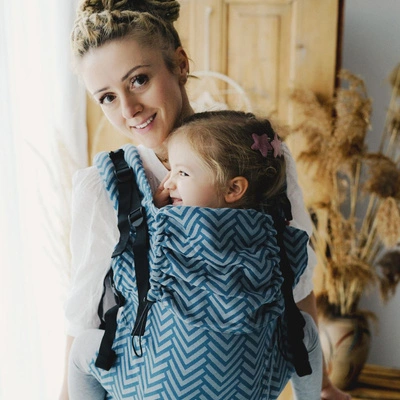
Baby Carrier Preschooler - Sky Miles

Baby Carrier Preschooler - Adventure Miles

Baby Carrier Prime Gray Moonstone v3

Baby Carrier Prime Platinum Miles v3

Baby Carrier Prime Adventure Miles v3

Baby Carrier Prime Natural Miles v3

Baby Carrier Prime Slate Moonstone v3

Baby Carrier Prime Umber Lightness v3
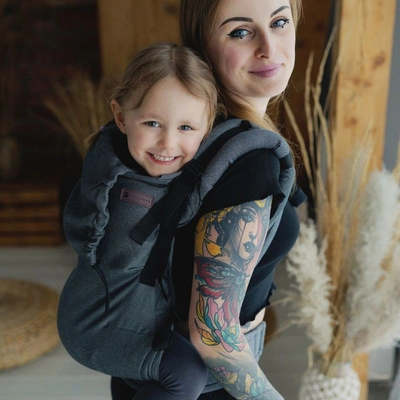
Baby Carrier Preschooler - Slate Moonstone
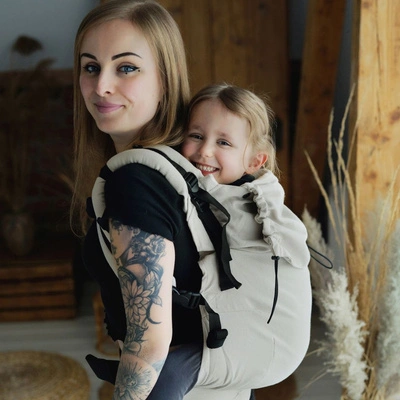
Baby Carrier Preschooler - Beige Moonstone

Baby Carrier Prime Re Rocky Miles v3
